
[Exclusive] National Labor Relations Commission Recognizes Subcontracted Workers’ Wages as a Subject of Collective Bargaining with the Principal Contractor for the First Time
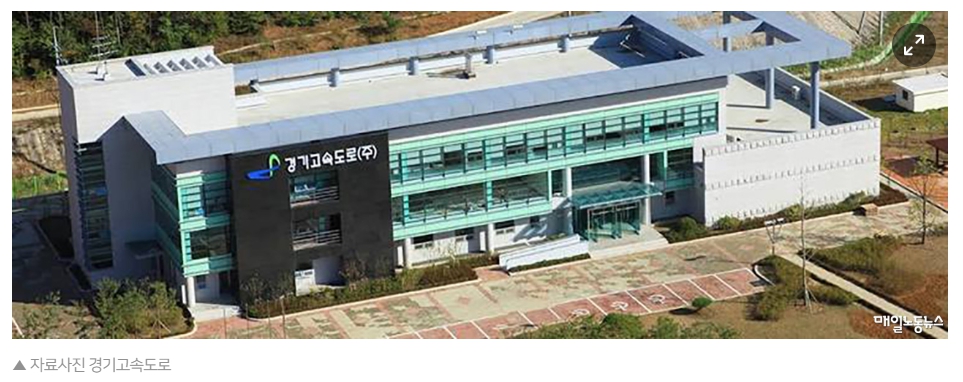
Gyeonggi Expressway’s outsourcing contract specifies annual basic wage increases over a five-year period.
The National Labor Relations Commission (NLRC) has ruled that Gyeonggi Expressway Co., Ltd. qualifies as an employer with substantive and specific control over the determination of wage-related working conditions for workers employed by its subcontractor. This marks the first time that a principal contractor has been recognized as an employer in relation to the wages of subcontracted workers.
Wage Levels and Increases Controlled Through an Outsourcing Contract
According to information obtained by Labor Today on November 10, the NLRC dismissed an appeal filed by Gyeonggi Expressway on September 23 concerning a corrective order requiring the company to publicly announce a trade union's request for collective bargaining. On June 4, the Public Industry Hope Union, headed by Chairman Jung Tae-ho, requested collective bargaining with Gyeonggi Expressway, the principal contractor. When the company failed to publicly announce the bargaining request, the union filed an application for corrective action with the Gyeonggi Regional Labor Relations Commission (RLRC). The Gyeonggi RLRC ruled in favor of the union, and the NLRC upheld that decision.
According to the NLRC's decision, Gyeonggi Expressway effectively controlled both the wage levels and future wage increases of workers employed by its subcontractor, Yido Co., Ltd. The five-year outsourcing contract for the operation of the Suwon?Osan?Pyeongtaek Expressway specified the number of workers to be deployed by job category, labor costs, and an annual increase of approximately 3% in total basic wages compared with the preceding year. These provisions were incorporated into the cost breakdown attached to the outsourcing contract, which covers the period from September 1, 2022, to August 31, 2027.
The cost breakdown lists basic wages, various allowances, and retirement benefit provisions for each year. In the toll collection and operations management division, staffing levels and labor costs are categorized by position and responsibility, including site managers, team leaders, administrative managers, supervisors, toll collectors, and cooks. The annual basic wage calculations reflect increases of approximately 3% over the preceding year. In effect, the labor costs and wage increase rates that would form the basis of annual wage negotiations between the subcontractor and its employees had already been established several years earlier through the contract between the principal contractor and the subcontractor.
Gyeonggi Expressway argued that the subcontractor had independently prepared its business proposal and calculated its own labor costs and wage increase rates. However, the NLRC rejected this argument. The Commission noted that the difference between the principal contractor's estimated project cost and the subcontractor's bid price was relatively small. It also examined a provision in the bidding documents requiring the subcontractor to comply promptly with any instructions from the principal contractor to revise or supplement its business proposal. Because there were no restrictions on the scope or subject matter of such revisions, the NLRC determined that labor costs and wage increases could also be subject to the principal contractor's instructions.
The NLRC stated:
"The subcontractor's final bid amounted to approximately 98.2% of the estimated cost calculated by the principal contractor. Accordingly, the principal contractor's estimated cost effectively served as a ceiling or benchmark in determining the subcontractor's bid price and the labor costs included in that price."
The Commission further explained:
"The fact that the principal contractor entered into the contract without requesting revisions indicates that the proposed amount fell within the range acceptable to the principal contractor."
Principal Contractor Retains Discretion to Adjust Labor Costs, While Subcontractor Faces Reductions for Unfilled Positions
Another factor supporting the finding of employer status was that the principal contractor retained discretion over labor cost adjustments, while the subcontractor had limited ability to adjust wages beyond the contractual framework. The concession agreement between Gyeonggi Expressway and the government for the privately financed infrastructure project contained a provision allowing operating expenses to be transferred between budget categories or consolidated, provided that such adjustments did not interfere with the maintenance and operation of the expressway. By contrast, the subcontractor, Yido, was required to immediately report any vacancies resulting from employee resignations or other departures to Gyeonggi Expressway. If a vacancy remained unfilled for more than 30 days, the outsourcing service fee would be reduced by the corresponding labor costs. However, even if the subcontractor deployed additional personnel, the contract price would not increase.
The NLRC also considered the subcontractor's profit margin of just 2%.
The Commission stated:
"The subcontractor's profit margin of only 2% indicates that its role was closer to personnel management based on reimbursement of actual costs than to that of an independent business seeking profits by assuming business risks, such as reducing labor costs."
It concluded:
"Whether wages for subcontracted workers would be increased, and by how much, was not left to the subcontractor's independent discretion. Rather, these matters were substantively determined by the outsourcing fees and labor cost calculations established by the principal contractor."
Union Calls for Expansion of Collective Bargaining to Wage-Related Issues
Jung Tae-ho, chairman of the Public Industry Hope Union, commented:
"In outsourced service workplaces, it is common for principal contractors to determine working conditions and exercise control over workers through outsourcing contract prices. This ruling confirms that principal contractors exercise substantive employer authority under such arrangements."
He further stated:
"This decision should serve as an opportunity to expand collective bargaining with principal contractors to include wage-related issues. Principal contractors should accept the NLRC's ruling, stop delaying collective bargaining, and engage in constructive negotiations that promote cooperation and mutual benefit between principal contractors and subcontractors."
Reporter: Lim Se-woong Published: November 11, 2026, at 6:30 a.m. Email: imsw@labortoday.co.kr
Source: Labor Today (매일노동뉴스) Website: https://www.labortoday.co.kr
| No | Title | Date | Access | File |
|---|---|---|---|---|
| 376 | Notice A Pioneer of Korean-English Labor Law Content: [Interview] Bongsoo Jung, Certified Labor Attorney at KangNam Labor Law Firm | 25.07.25 | 8554 |

|
| 375 | Notice 10 Top Lawyers In Seoul For English-Speaking Foreigners (April 27, 2022): KangNam Labor Law Firm was selected as one of ten best law firms in Seoul by the International Magazine. | 25.03.07 | 7035 |
|
| 374 | Notice · Event: Kangnam Labor Law Firm 2026 Fall HR Forum · Theme: Labor Risk Outlook and Strategic HR Directions for Businesses in the AI Era | 26.10.25 | 472 |
|
| 373 | Notice Kangnam Labor Law Firm and B&H Tax Accounting Firm Sign MOU for Strategic Business Cooperation On October 13, 2026 | 26.10.20 | 413 | |
| 372 | Notice Regarding Legislation to Extend the Mandatory Retirement Age: A Conversation between Dr. Jun-Ki Han and Labor Attorney Bongsoo Jung | 26.09.03 | 400 | |
| [Exclusive] National Labor Relations Commission Recognizes Subcontracted Workers’ Wages as a Subject of Collective Bargaining with the Principal Contractor for the First Time N | 26.11.11 | 8 |
|
|
| 370 | Improvement of Workplace Culture N | 26.11.10 | 24 | |
| 369 | “Apply the Labor Standards Act to All Workers”: Special Employment and Platform Workers Rally at the Presidential Office Workers demand minimum remuneration standards and legislation to protect designated drivers, while voicing opposition to the pro N | 26.11.10 | 70 |
|
| 368 | Seven in Ten Employees Say the Inclusive Wage System Should Be Banned 31% of Employees Say They Are Not Properly Paid for Overtime, Night Work, and Holiday Work N | 26.11.04 | 265 |
|
| 367 | Korean Metal Workers’ Union Calls for an End to Rulings Narrowing the Scope of Illegal Dispatch and Delays in Court Proceedings Subcontracted Workers from Hyundai Steel, Hyundai Motor and Other Companies Hold Press Conference in Front of the Supreme | 26.11.02 | 375 |
|
| 366 | November 1st week - Labor Case: Dismissal Based on a Poor Performance Evaluation | 26.11.01 | 399 |

|
| 365 | Who Gets Promoted to Executive Positions? What Qualifications and Leadership Skills Are Required? | 26.11.01 | 420 |
|
| 364 | Justified and Unfair Dismissal ? Legal Standards and Practical Responses ? While preparing the third revised edition of the Dismissal Manual, I wrote an introductory article. | 26.10.29 | 532 | |
| 363 | Employee Resignation and Job Transition Management ? Perspectives of Employees and Employers | 26.10.28 | 576 | |
| 362 | Number of Suspected “Disguised Workplaces with Fewer Than Five Employees” More Than Doubles in Seven Years Nearly 150,000 Suspected Workplaces Identified in 2025, Concentrated in the Restaurant and Accommodation Sectors ? Calls for Financial Penalti | 26.10.28 | 562 |
|
| 361 | Labor Management for Small and Medium-Sized Enterprises (SMEs) | 26.10.27 | 609 |
|
| 360 | Failure to Reduce Wage Inequality: Wage Gap Between Regular and Non-Regular Workers Reaches Record High August Supplementary Survey by Employment Type Shows Nearly Twofold Wage Difference … Number and Proportion of Non-Regular Workers Also Reach Rec | 26.10.26 | 705 |
|
| 359 | ·Event: Kangnam Labor Law Firm 2026 Fall HR Forum · Theme: Labor Risk Outlook and Strategic HR Directions for Businesses in the AI Era | 26.10.25 | 645 |
|
| 358 | Human Resource Management, Compensation Policy: | 26.10.24 | 598 | |
| 357 | Fundamental Principles of Human Resource Management: The Right Person in the Right Job and Effective Recruitment Procedures | 26.10.21 | 779 |